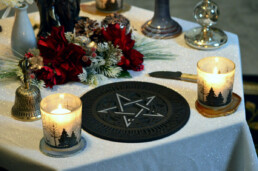
Wiccan candle magick is one of the most accessible and widely practiced forms of spellcraft within Wicca and modern pagan traditions.
The word “magick” is spelled with a K to distinguish spiritual and ritual practice from stage magic or illusion.
The K also symbolises:
- Completion and power
- The union of the spiritual and material
- A reminder of ethical responsibility and intent
In modern pagan, Wiccan, and occult traditions, magick signals sacred practice, alignment with natural forces, and conscious transformation—rather than tricks or deception.
Rooted in symbolism, intention, and natural correspondences, candle magick uses flame as a living bridge between the physical and spiritual realms. Fire represents transformation, illumination, passion, and will—making candles ideal tools for focusing energy and manifesting change.
At its core, candle magick is not about forcing outcomes, but about aligning personal intention with natural and universal energies. In Wiccan belief, magick flows through all things. The practitioner’s role is to direct that energy mindfully, ethically, and with respect for free will. This is why many Wiccans follow the Wiccan Rede: “An it harm none, do what ye will.” Candle spells are therefore crafted to attract, release, heal, protect, or empower—never to dominate or coerce.
The Symbolism of the Candle
A candle itself is a powerful symbol. The wax represents the physical world and the body. The wick symbolises the soul or life force. The flame embodies spirit, transformation, and divine connection. When a candle burns, it visually mirrors the process of intention moving from thought into manifestation. As the wax melts, energy is released and reshaped.
Colour plays an essential role in Wiccan candle magick. Each candle colour corresponds to specific energies and intentions. For example, white is universal and may substitute any colour, representing purity and spiritual clarity. Red is associated with passion, courage, vitality, and strength. Pink is used for love, compassion, and emotional healing. Green aligns with abundance, growth, and fertility. Blue supports peace, communication, and healing, while black is often used for protection, banishing, and deep transformation—not negativity, but powerful release.
Timing and Lunar Influence
Many Wiccans work with natural cycles, particularly the phases of the Moon. Candle spells set during the New Moon are ideal for beginnings and intention-setting. The Waxing Moon supports growth and attraction spells. The Full Moon amplifies power, making it ideal for manifestation and gratitude rituals. The Waning Moon is associated with release, cleansing, and banishing unwanted energy.
Sabbats—seasonal pagan festivals such as Imbolc, Beltane, or Samhain—are also potent times for candle magick. These moments align personal spellwork with the turning of the Wheel of the Year, reinforcing the natural rhythm of intention, growth, harvest, and rest.
Preparing for Candle Magick
Preparation is as important as the spell itself. Before lighting a candle, practitioners often cleanse their space and themselves. This may include grounding through breath, meditation, or simple ritual actions such as washing hands, lighting incense, or casting a protective circle. Cleansing is not about removing “bad” energy, but about creating clarity and focus.
Anointing candles is another common practice. Oils—often infused with herbs—are rubbed onto the candle to strengthen intention. Typically, candles are anointed toward the wick to draw something in, or away from the wick to release something. During this process, the practitioner concentrates on the desired outcome, visualising it clearly and emotionally.
Spoken Words and Visualisation
Words carry vibration and power. Many candle spells include spoken affirmations, chants, or invocations. These do not need to be elaborate or archaic; sincerity matters far more than poetic structure. Speaking aloud reinforces intention, while visualisation feeds the spell with emotional energy. Wiccans believe that emotion is the fuel of magick—without it, a spell is hollow.
Silence can be equally powerful. Some practitioners work intuitively, allowing the flame itself to become a focal point for meditation and energetic release. Watching the candle burn is considered a form of active spellwork, as attention anchors intention.
The End of the Spell
Some spells require the candle to burn completely, while others involve extinguishing the flame intentionally. Many Wiccans prefer to snuff a candle rather than blow it out, as blowing is thought to scatter energy. When the spell concludes, gratitude is offered—to the elements, deities, or universal forces—and the intention is released without attachment. Trust is essential; obsession can block manifestation.
Candle Magick as Spiritual Practice
Beyond spells, candle magick is a deeply personal spiritual practice. It teaches patience, self-awareness, and reverence for natural cycles. Over time, practitioners develop a relationship with flame as teacher and mirror, reflecting inner truth and transformation.
Ultimately, Wiccan candle magick is less about control and more about co-creation—working in harmony with nature, spirit, and intention. A single candle, lit with clarity and respect, becomes a sacred act of alignment, reminding the practitioner that change begins within and radiates outward, one flame at a time.
See our Instagram and We Are 8 platforms for specific Wiccan Spells
Book a reading with Sabrina
Sabrina is trained to remove darker energies whether black magic, psychic attack, or contracts and chords from past lives. This type of healing channels the ancestors to heal you in this lifetime.